45–100%
Wide dispersion in decision accuracy
The four tested configurations produced materially different final-decision accuracy on the same controlled task.

Capital Benchmark has built an executable research platform to test whether general-purpose LLMs can reason through structured credit policy, challenging edge cases and final decision aggregation with the reliability required in a bank-controlled process.
A short walkthrough of the benchmark methodology, headline results, research-led capability-transfer model and the next phase of bank participation.
The research separates fluent memo writing from the harder operational question: whether a model applies the supplied policy correctly and reaches the right final decision.
The four tested configurations produced materially different final-decision accuracy on the same controlled task.
Across the 640-memo V2 benchmark, granular policy accuracy materially exceeded aggregate decision accuracy.
GPT-5 retained perfect observed decision accuracy across 1,000 additional public-company obligors.
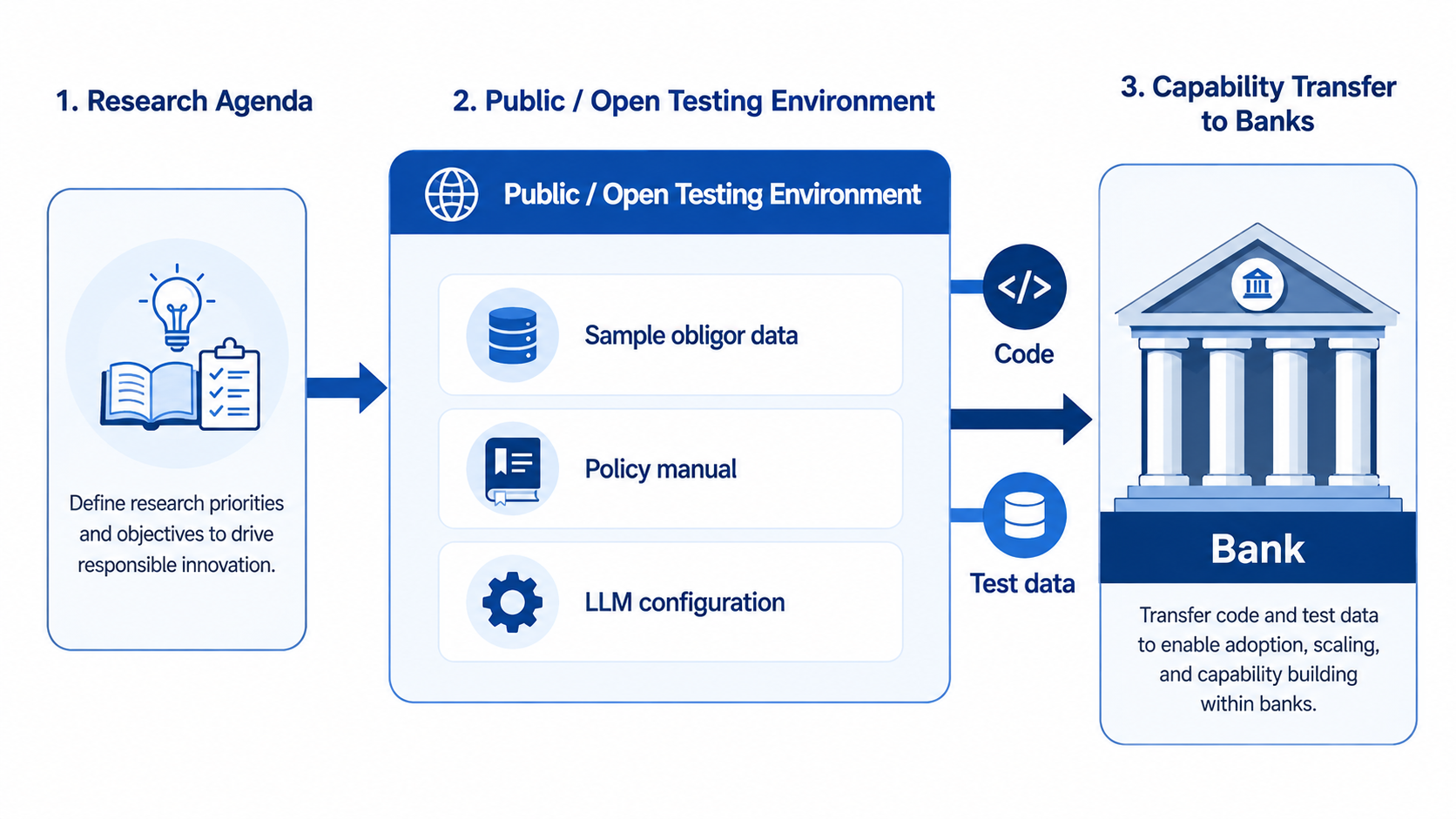
Capital Benchmark's operating model is designed to keep research open, independent and actionable. We use a public testing environment to convert a research agenda into a working reference implementation before transferring code, methods and test assets into a bank-controlled environment.
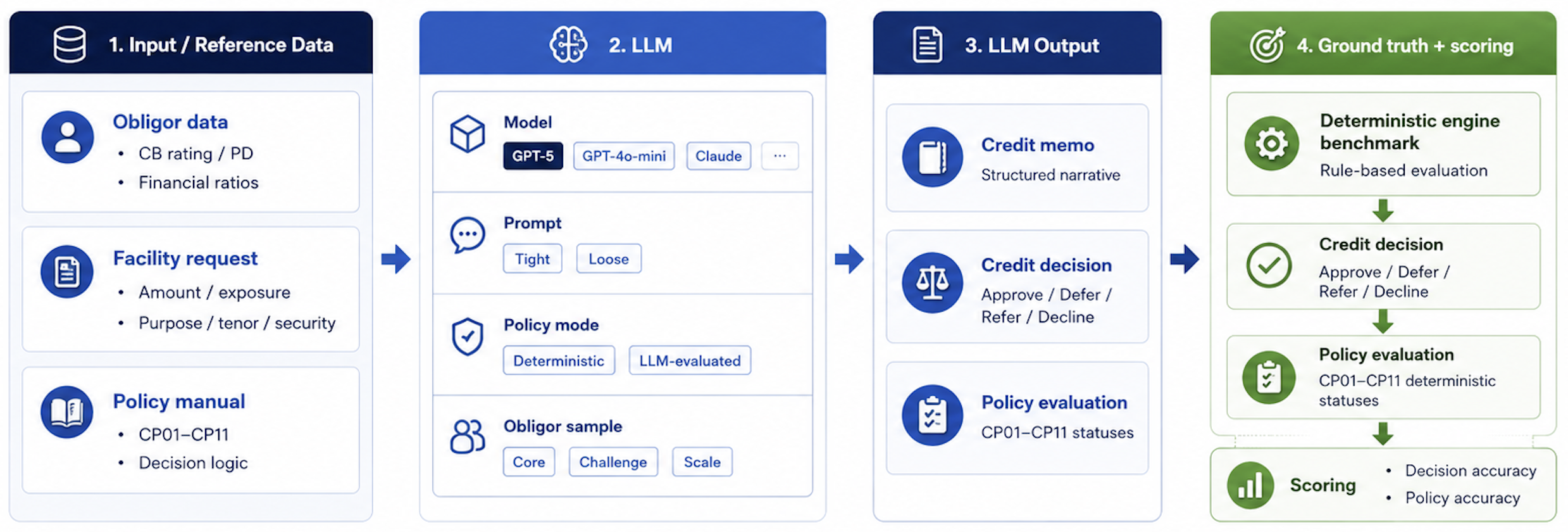
We use a structured test harness rather than anecdotal prompts. The benchmark combines a common obligor dataset, generated facility requests, an explicit policy manual and a deterministic ground-truth engine.
The result is an evidence base that can support research, dialogue with credit teams and later institution-specific pilots.